Explain SSH config code
Paste an ~/.ssh/config and Vibe explains what each Host block sets, which key goes to which server and what ssh actually uses when several blocks match.
Up to 1,500 characters (about 60 lines). Your code is sent to Unvibe and Anthropic to write the explanation. Don't paste keys or passwords. Common key formats are refused.
Vibe25 lines selected
Press Explain it for the sample, or paste your own code first.
What this SSH config sample shows
- Host and HostName
Hostis the name you type, andHostNameis the real server. Sossh staginggoes tostaging.example.comasdeployon port 2222:ssh -G staging, which prints the settings ssh would use without connecting, showedhostname staging.example.com,user deployandport 2222.- keys per host
IdentityFilepicks the key, andIdentitiesOnly yestells ssh to offer only that one.work-githubis a second name for github.com with the work key:ssh -G work-githubshowedhostname github.comand onlyid_ed25519_work.git clone git@work-github:acme/app.gitcalled ssh withgit@work-github, so the clone used the work key.- jump hosts
ProxyJump bastionmakes ssh connect tobastionfirst and reachstagingthrough it. The bastion's own block applies to that first hop:ssh -G bastionshowedhostname bastion.example.com,user deployand the default port 22.- Host * and first match
Host *matches every host, soServerAliveInterval 60showed up for all of them, including a host with no block of its own. With it, after 60 seconds without data from the server, ssh sends a message asking for a reply; the default, 0, never does. For each setting, ssh keeps the first value it reads, which is why the catch-all block goes last.
Good to know
- Checked with OpenSSH 10.6 using
ssh -G -F config <host>on a test home folder: nothing connected anywhere. - A misspelled option stops ssh before it connects: with
HostNme, ssh printedBad configuration option: hostnmeandterminating, 1 bad configuration options. - Hosts without
IdentitiesOnly yesgot ssh's whole list of default key files, six of them from~/.ssh/id_rsato~/.ssh/id_mldsa44_ed25519, and ssh can offer keys from your agent too. Each key ssh offers counts as a try, and the OpenSSH server'sMaxAuthTriesdefault is 6, so with many keys the right one can come too late.
Watch out: Put Host * first and its values win over everything below it. With a Host * block holding User nobody at the top of the file, ssh -G staging showed user nobody, although the staging block says User deploy. Keep specific hosts at the top and the catch-all at the end.
Explain SSH config code beside your editor
Unvibe is a free app for Mac and Windows. In the app there is no pasting: select code in any app and press Control+U (Ctrl+Alt+U on Windows).
Install on Mac
curl -fsSL https://unvibe.site/install.sh | bashPaste into Terminal. Unvibe isn't notarized by Apple yet, so this is the smooth path.
Or download the .dmg · Intel Mac build · SHA-256 checksums
Opening the .dmg the first time
- Open the .dmg and drag Unvibe to Applications.
- Open it once; macOS says it can't verify it. Click Done.
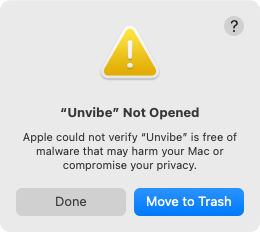
Real screen, macOS 15 - System Settings › Privacy & Security › Open Anyway. Confirm, then enter your Mac password. The button shows for about an hour after you try to open Unvibe.
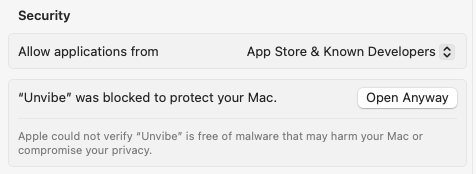
Real screen, macOS 15
The Terminal line checks the download against the published SHA-256 and Unvibe's self-signed signature before it installs anything. More help with the first open