Explain .env code
Paste a .env file, with real keys and passwords swapped for placeholders, and Vibe explains what each setting is for, which part a # cuts off and why every value reaches your code as text.
Up to 1,500 characters (about 60 lines). Your code is sent to Unvibe and Anthropic to write the explanation. Don't paste keys or passwords. Common key formats are refused.
Vibe19 lines selected
Press Explain it for the sample, or paste your own code first.
What this .env sample shows
- names and values
- Each line is
NAME=value, and the app reads it as an environment variable:process.env["PORT"]in Node,os.environ["PORT"]in Python. Lines starting with#are comments, and blank lines are skipped. - quotes and comments
- A
#after a value starts a comment, soDEBUG=true # this part is a commentcame through astrue. Inside double quotes it doesn't:WELCOME_TEXTkeptHello # this is part of the value, and the quotes aroundMAIL_FROMkept its spaces and<team@example.com>in one value. - text only
- Every value arrives as a string. In Node,
process.env["PORT"] + 1printed30001, not 3001, andprocess.env["DEBUG"] === truewas false while=== "true"was true. Numbers and true/false have to be converted in your code. - loading the file
- Nothing reads a .env file on its own: plain
node show.jssaw every value asundefined.node --env-file=.env show.jsloaded it, and in Pythonload_dotenv()from python-dotenv does. A variable already set wins: withPORT=8080set, both kept 8080, and onlyload_dotenv(override=True)let the file's 3000 win.
Good to know
- This box sends what you paste to Unvibe and Anthropic, and only common key formats are refused, so paste your .env.example or swap each real value for a placeholder first.
- Run with Node 25.7.0 (
--env-file) and python-dotenv 1.2.4 on this file: both read the same values, apart fromAPP_URL(see below). - A missing file stops Node before your code runs:
node --env-file=.env.missingprintednode: .env.missing: not foundand exited with code 9.--env-file-if-existsprinted.env.missing not found. Continuing without it.and ran. - Keep the real .env out of git and commit a
.env.examplewith the same names and placeholder values, so others know which settings to fill in.
Watch out: ${PORT} isn't filled in everywhere. python-dotenv turned APP_URL into http://localhost:3000, but Node's --env-file passed it through as the text http://localhost:${PORT}, so the same file gave the two apps different URLs. Write the full value out when more than one tool reads the file.
Explain .env code beside your editor
Unvibe is a free app for Mac and Windows. In the app there is no pasting: select code in any app and press Control+U (Ctrl+Alt+U on Windows).
Install on Mac
curl -fsSL https://unvibe.site/install.sh | bashPaste into Terminal. Unvibe isn't notarized by Apple yet, so this is the smooth path.
Or download the .dmg · Intel Mac build · SHA-256 checksums
Opening the .dmg the first time
- Open the .dmg and drag Unvibe to Applications.
- Open it once; macOS says it can't verify it. Click Done.
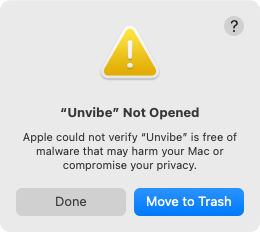
Real screen, macOS 15 - System Settings › Privacy & Security › Open Anyway. Confirm, then enter your Mac password. The button shows for about an hour after you try to open Unvibe.
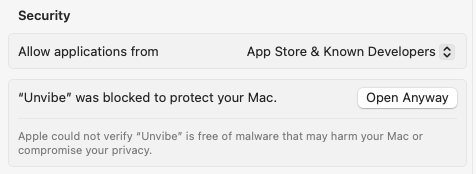
Real screen, macOS 15
The Terminal line checks the download against the published SHA-256 and Unvibe's self-signed signature before it installs anything. More help with the first open